Some of the biggest names associated with AI music right now include Ghostwriter, whose viral track "Heart on My Sleeve" brought AI music into mainstream headlines; AI educator and creator Desmond A Sounds, who has built a large following through Suno tutorials and AI music strategies on YouTube; music industry commentator Rick Beato, whose AI music discussions regularly reach hundreds of thousands of musicians; Suno co-founder Mikey Shulman, one of the most influential figures driving AI music adoption worldwide through Suno; and independent AI creator Alec Watson, whose AI-generated productions and workflow demonstrations continue to gain traction across YouTube and social platforms. Producers looking to see where AI music is actually growing should watch YouTube, Suno's featured creator charts, Spotify AI playlists, TikTok music trends, and creator communities where these names and their productions are generating the most discussion and engagement.
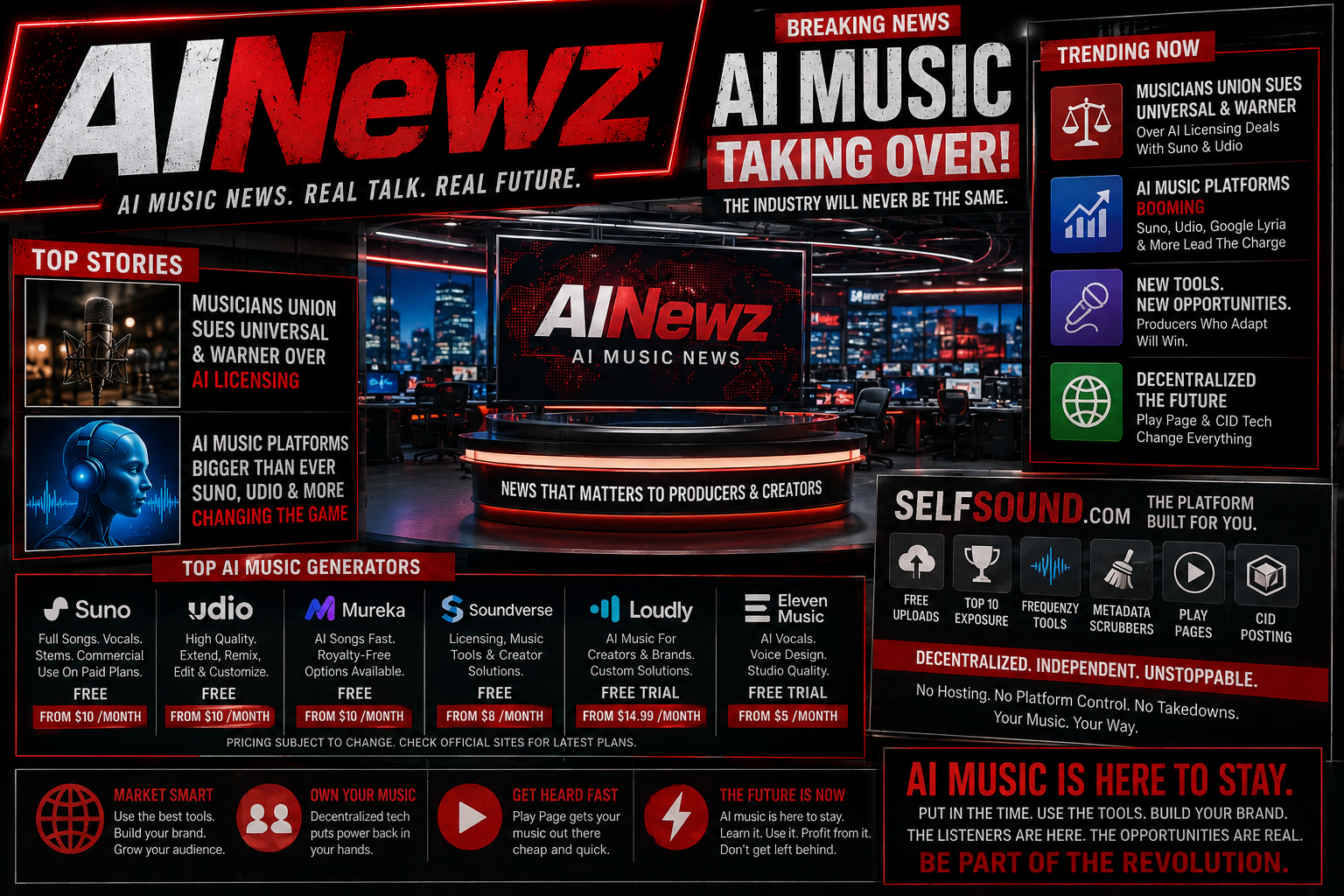
The biggest AI music story right now is the new lawsuit from the American Federation of Musicians against Universal Music Group and Warner Music Group. The union claims the labels licensed recordings to AI music companies like Suno and Udio without properly compensating the musicians who played on those recordings. This matters because AI music is no longer just a fun generator tool. It is now tied directly to label deals, licensing rights, training data, artist compensation, and who controls the future sound of music. AI producers need to understand this because the industry is moving fast, and the rules around ownership, commercial use, and credit are becoming more serious every month.
The second major story is the continued rise of AI music platforms as real industry competitors. Suno, Udio, Google Lyria, Mureka, Soundverse, Loudly, Eleven Music, and other tools are pushing AI music into professional territory. These platforms are not just helping people make quick songs anymore. They are building full music creation systems with vocals, stems, editing tools, commercial-use options, and advanced prompting. This is causing attention because the old music industry is being forced to react. Some companies are fighting AI, some are licensing it, and some are preparing to control it. That means independent AI producers need to move now while the door is still open.
The best marketing technique right now is not just posting a song and waiting. That does nothing. Producers need to build a real identity around their music. That means using one name everywhere, posting consistently, commenting on other producers’ work, joining music groups, using short clips, making cover art that looks professional, and giving every song a clear reason to exist. A song needs a story, a hook, a link, and a place where people can hear more. The producers who win will be the ones who act like brands, not random uploaders. Every release should be treated like a small campaign.
The strongest tools right now are smart-link tools, playlist pitching tools, artist profile tools, email list tools, and landing page systems. Feature.fm is useful for smart links, pre-save pages, release links, fan data, and tracking. SubmitHub and Groover help producers submit music to blogs, playlists, curators, and influencers. Spotify for Artists, Apple Music for Artists, YouTube Studio, TikTok, Instagram Reels, and Facebook groups are still important because they help producers reach listeners where attention already exists. Email marketing is also becoming important again because social platforms can limit reach at any time. Producers need links, analytics, fan contact tools, and a landing page that sends people directly to the music.
Suno is still one of the most popular AI music generators. Its free plan offers daily credits, but no commercial use. Its paid plans unlock commercial rights for new songs, better models, more credits, stems, editing tools, longer uploads, priority generation, and advanced voice features. Udio is another major option and is known for strong audio quality, style control, remixing, extension tools, and more detailed song shaping. Mureka is gaining attention for quick song creation, vocal tools, and royalty-free music options. Soundverse, Loudly, Beatoven, Eleven Music, and Google Lyria are also part of the growing market, each offering different strengths for creators, background music, editing, licensing, or production workflows. The main point is simple: free tools are good for testing, but serious producers will eventually need paid plans, better rights, better exports, and better control.
Selfsound.com gives AI music producers a place to upload, promote, and build around their work without being treated like outsiders. It offers free uploading, top 10 exposure, producer visibility, music tools, metadata scrubbers, frequency tools, Play Pages, CID content posting, and a growing system built around helping AI producers become more professional. This is not just another place to dump songs. It is a platform built for producers who want to be seen, organized, and taken seriously. Producers who ignore websites like this are going to fall behind the ones who use every available tool.
Selfsound is now moving deeper into decentralized logic and new ways to market music productions. Play Page is one of the biggest pieces of that direction. Instead of relying only on a platform, a producer can create a fast music landing page, upload it to IPFS, generate a CID key, and share that link anywhere. No traditional hosting. No platform control. No company deleting your production page because their rules changed. Play Page gives producers a cheap and direct way to promote albums, singles, collections, and music drops. This is the kind of tool that could become huge because producers are looking for new ways to market themselves without being trapped inside one platform.
AI music is here to stay. The people who keep calling it fake, lazy, or worthless are already falling behind. The listeners are still listening. The tools are still improving. The platforms are still growing. The money is starting to move. If you put in the time, learn the tools, market yourself properly, build your name, and use websites like Selfsound and generators like Suno, you can create real opportunities. The music industry is changing forever. Be part of it or get left behind. Haters will never move forward, but listeners will.