One of the biggest misconceptions surrounding artificial intelligence and music is the belief that the ultimate goal is simply to generate more songs.
The reality is very different.
The most promising use of AI may not be replacing musicians at all. Instead, it may be helping musicians unlock new creative possibilities that were previously impossible or financially impractical. Recent developments involving Boy George provide a fascinating example of how this future may look.
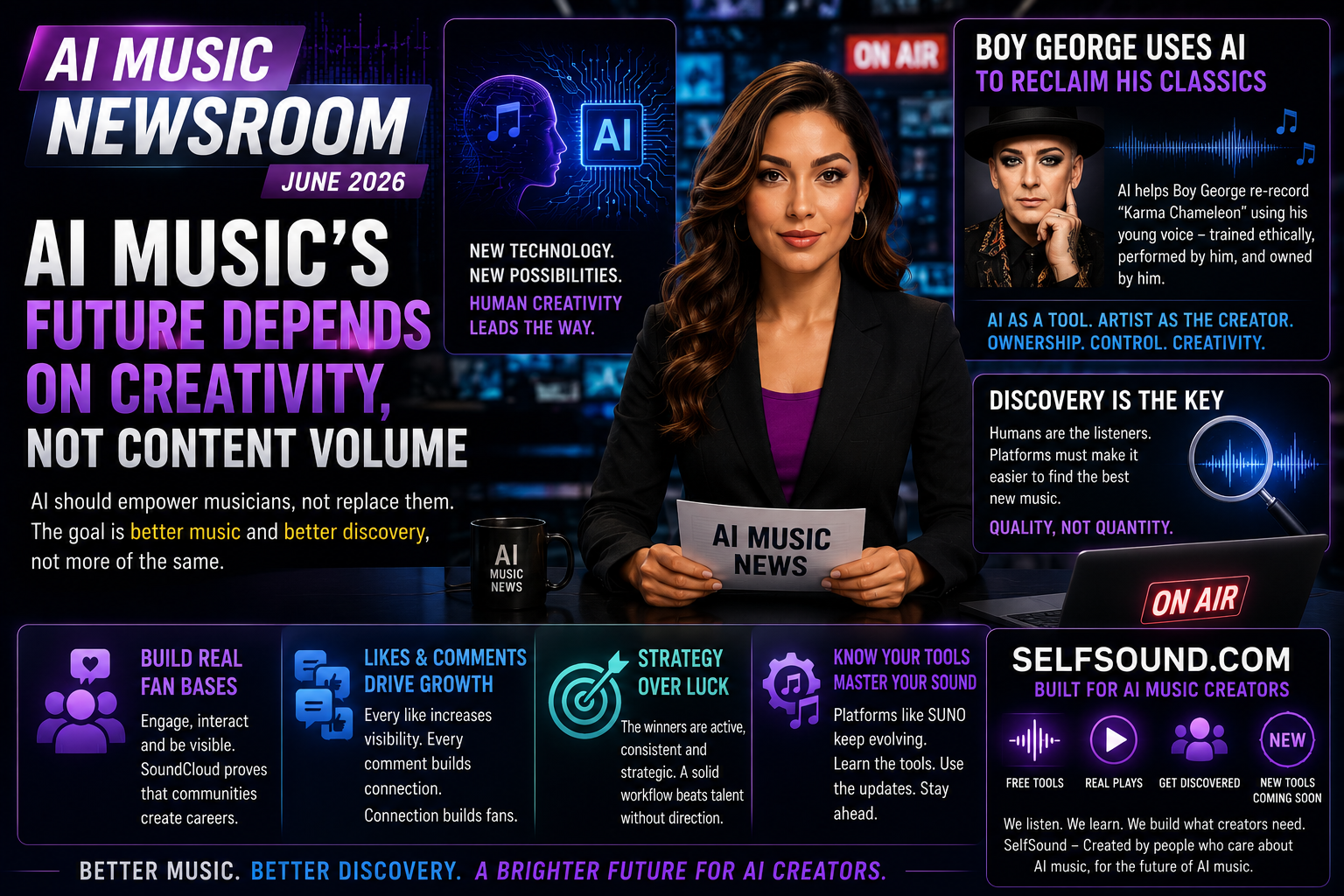
Rather than using AI to replace himself, Boy George has used the technology to revisit his own musical history. Working with Artist Included, he has re-recorded "Karma Chameleon" by combining a fresh modern vocal performance with AI trained on recordings of his younger voice. The result is not a machine-generated version of the song. It is still Boy George performing the track, but with technology helping bridge the gap between past and present.
This approach highlights something many people miss in the wider AI debate. The most valuable role for AI may be as a creative partner rather than a creative replacement.
For artists, this opens exciting possibilities. Older recordings can be reimagined for modern audiences. New versions of classic songs can be created while preserving their original character. Musicians can explore ideas that may have been impossible decades ago due to technical limitations. At the same time, artists gain new opportunities to regain ownership of their work through the creation of new master recordings.
This is a much more positive vision than the common narrative that AI will simply flood the world with endless generic music.
The real challenge facing the industry today is not a shortage of music.
There is already more music available than any listener could consume in a lifetime.
The challenge is discovery.
Humans are the listeners. Humans decide what matters. Humans decide which songs connect emotionally and which songs are forgotten.
As AI tools make music creation more accessible, platforms must become better at helping audiences discover quality music. The future of AI music will not be defined by how many tracks can be generated. It will be defined by how effectively great music can be found.
Quality still matters.
In fact, as more music enters the market, quality may become more important than ever.
Many producers spend months trying to perfect their music while spending almost no time building an audience.
This remains one of the biggest reasons why talented creators struggle to gain momentum.
The producers seeing genuine growth understand that listeners rarely become fans overnight. Audiences develop gradually through familiarity, trust, and consistent interaction. Platforms such as SoundCloud have demonstrated this principle for years. The artists who build strong communities are often the artists who are most visible, not necessarily the artists with the largest catalogues.
Building a fan base requires patience. It requires engagement. It requires showing up consistently even when the numbers are small.
Likes and comments may seem insignificant on the surface, but they are often the foundation of audience growth. Every interaction increases visibility. Every conversation creates another opportunity for discovery. Every returning listener represents progress.
Many creators focus on streams first and reputation second.
The successful ones do the opposite.
They build credibility, establish a recognizable identity, and develop relationships within their communities. The plays tend to follow afterwards.
There is no shortage of optimism surrounding AI music, but there are some uncomfortable truths that every producer needs to understand.
Not everyone will succeed.
The accessibility of AI tools means more people can create music than ever before. While that is positive for creativity, it also means competition is growing rapidly. Every day, thousands of new tracks appear across multiple platforms.
Most of those tracks receive very little attention.
The difference between creators who grow and creators who stagnate is rarely luck.
It usually comes down to effort and process.
The producers making progress are not operating randomly. They have developed workflows that allow them to create consistently, evaluate results, improve their output, and remain visible within their chosen communities.
Many creators are still approaching AI music casually. The people gaining traction are approaching it professionally.
They understand that every release is part of a larger strategy.
They understand that visibility matters.
They understand that consistency matters.
Most importantly, they understand that creating music is only one part of the job.
As AI music technology continues to evolve, one advantage becomes increasingly valuable.
Knowledge.
The most successful producers are not necessarily using different tools from everyone else. They are simply using those tools more effectively.
Platforms continue to release new features, improved workflows, and enhanced creative controls. Suno is a perfect example. The platform continues to develop new capabilities that give creators greater influence over song structure, refinement, editing, and overall quality. Producers who invest time learning these tools immediately place themselves in a stronger position.
The same principle applies across the entire AI music landscape.
Professional creators stay informed.
They understand updates.
They experiment with new features.
They learn what works and what does not.
They treat knowledge as a competitive advantage.
In a rapidly changing industry, standing still is often the fastest way to fall behind.
As AI music continues to mature, platforms designed specifically for AI creators are becoming increasingly important.
Selfsound.com was built with a simple understanding that AI music producers face unique challenges and opportunities. Long before AI music became a mainstream conversation, the people behind the platform recognised that creators would need dedicated spaces where their work could be discovered and appreciated.
Today, Selfsound.com continues to provide free tools for AI music producers while creating opportunities for genuine listener engagement and meaningful exposure. The platform is focused on helping creators receive real plays and connect with audiences who are actively interested in AI-generated music.
What makes Selfsound particularly interesting is its commitment to evolution. The platform continues to develop new tools and features based on direct feedback from its users. Rather than remaining static, it adapts as technology changes and as creator needs evolve.
This approach reflects a deeper understanding of the industry.
AI music is moving quickly.
Creators are learning quickly.
Platforms must evolve quickly as well.
Selfsound.com continues to position itself as a platform built for AI producers by people who genuinely care about the future of AI music and who understand the importance of listening to the community they serve.
The future of AI music will not be decided by algorithms alone.
It will be shaped by creators, listeners, and the platforms that connect them.
Technology can help artists create new music. It can help them revisit older work. It can help them explore ideas that would once have been impossible. What it cannot do is replace the emotional connection that makes music meaningful.
Humans remain the audience.
Humans remain the judges.
Humans remain the reason music exists.
The platforms and creators that understand this simple truth will be the ones best positioned for the future.
Because in the end, the goal is not to create more music.
The goal is to create better music and make it easier for people to discover it.