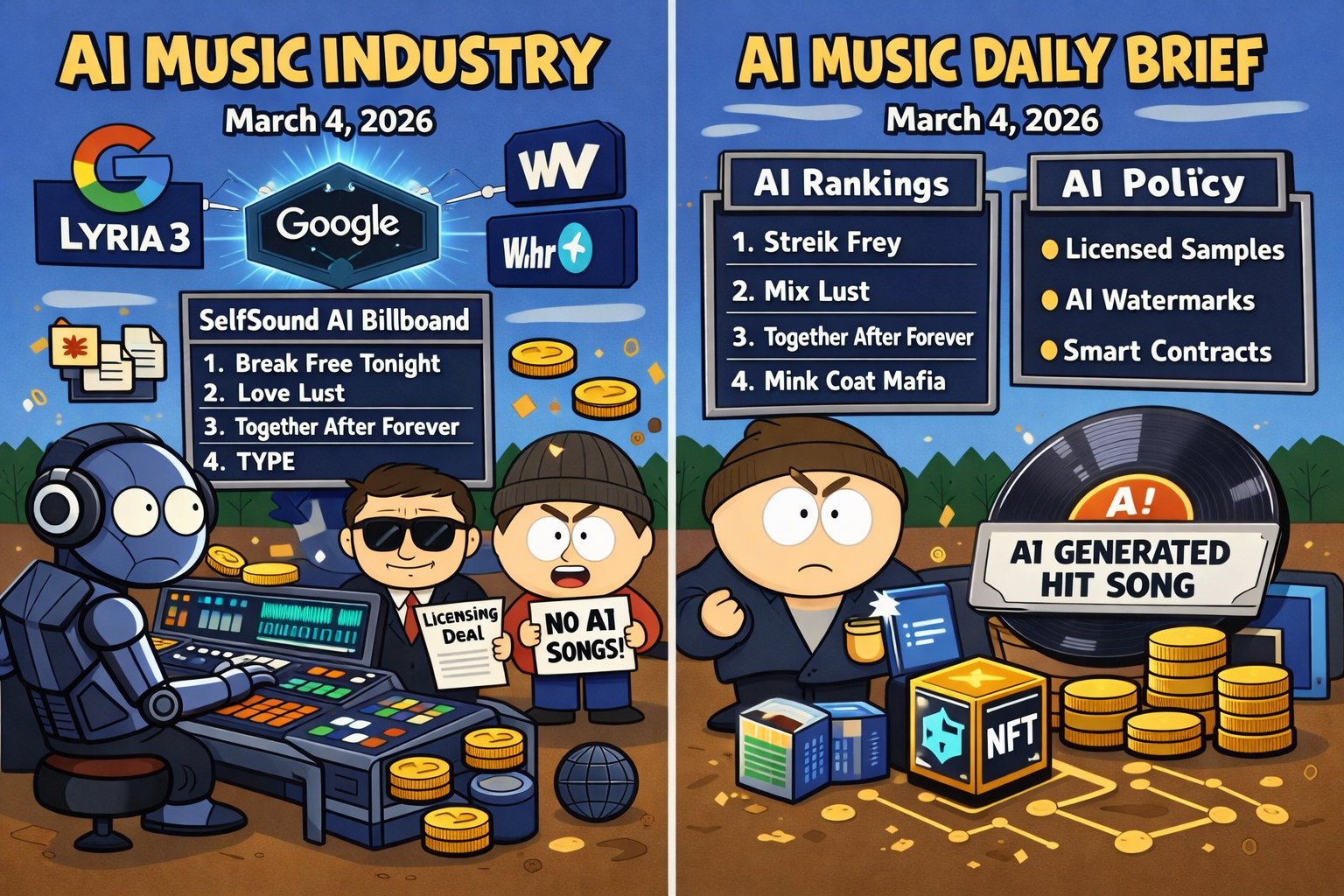
Google’s acquisition of the generative platform ProducerAI signals a new phase where AI music creation becomes embedded directly into major ecosystems. The system allows users to generate songs, instruments, and effects from prompts while embedding watermarking technology to identify AI content.
AI startups shifting from lawsuits to partnerships
AI music companies such as Suno and Udio are moving toward licensing deals with major labels after lawsuits from the music industry. Instead of attempting to halt AI tools, labels are negotiating agreements that allow generative models to operate using licensed music catalogs.
Artist backlash continues
Advocacy groups and musicians remain concerned about AI music flooding streaming platforms. Critics claim generative tools can produce millions of tracks daily, diluting royalty pools and overwhelming discovery systems.
Industry strategy shift
Major label partnerships with AI companies suggest a strategic pivot: the industry is beginning to regulate and monetize AI music rather than fight it outright.
The regulatory direction for AI music in 2026 is consolidating around three structural rules:
These changes signal the beginning of an “AI licensing economy” where generative music platforms operate more like streaming services with negotiated rights structures.
AI music is now appearing in mainstream charts. A viral AI-generated cover released in late 2025 reached the Billboard World Digital Song Sales chart and gained millions of streams within weeks, demonstrating that audiences are already consuming AI tracks at scale.
Independent AI‑focused rankings are emerging to track this movement.
SelfSound AI Billboard represents a community-driven chart ecosystem designed specifically for AI producers, allowing creators to rank based on engagement and traction without traditional label gatekeeping.
Implications for producers:
Blockchain infrastructure is increasingly being explored as a provenance layer for AI-generated music.
Key emerging use cases:
Market analysis shows that NFT music ecosystems are evolving from speculative collectibles into infrastructure for rights management and creator monetization.
For AI producers, blockchain may ultimately function as the audit trail for generative creativity.
Successful AI producers in the current environment are adopting hybrid strategies:
1. Build a recognizable creative identity
Top-performing AI artists pair generative tools with storytelling, branding, and consistent aesthetics.
2. Document authorship
Keeping records of prompts, stems, and workflow helps prove creative direction and protect rights.
3. Diversify distribution
Release music across traditional DSPs, AI-native platforms, and tokenized ecosystems.
4. Leverage community ecosystems
Participation in AI music communities and ranking systems increases visibility and collaboration opportunities.
Group Spotlight: AI Rap & Hip‑Hop Creators
This community focuses on prompt engineering for lyric‑driven AI music and collaborative beat experimentation. Members frequently share workflow techniques for:
The group functions as a collaborative hub where producers test new generative models and showcase tracks before wider release.