Google pushes AI music into mainstream creation tools
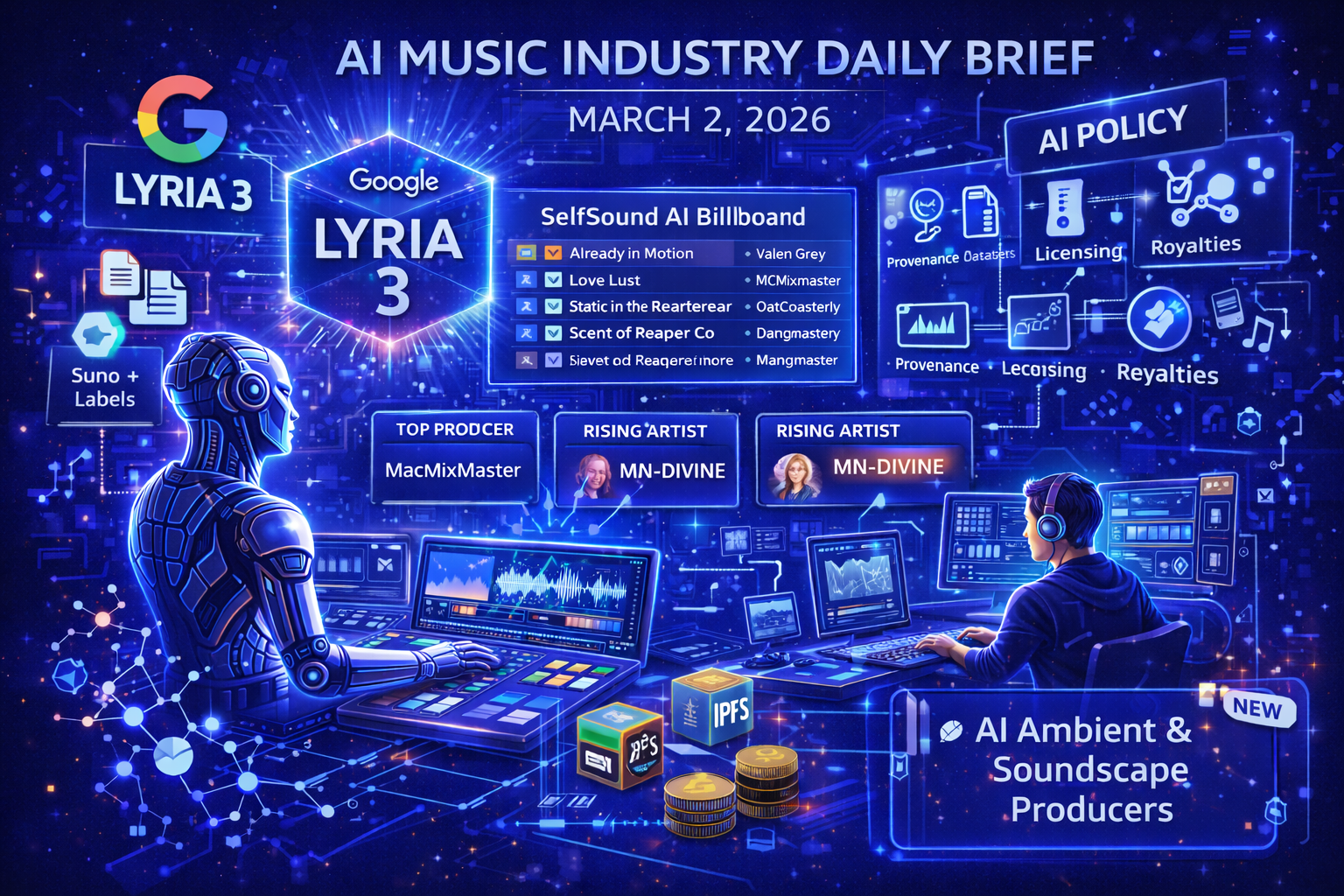
Lyria 3 is now embedded directly inside Gemini and ProducerAI, enabling conversational music production, lyric‑conditioned composition, and multimodal generation from text or images. All outputs carry SynthID watermarking for detection across platforms.
AI startups pivot from disruption to licensing alliances
Suno and Udio are shifting toward label partnerships and settlements after lawsuits over copyrighted training data, signaling a structural transition toward licensed AI music ecosystems.
Artist resistance intensifies against AI catalog flooding
Campaigns against Suno claim millions of AI tracks per day are diluting royalties and overwhelming streaming platforms, accelerating pressure for AI classification and moderation systems.
Industry direction:
AI music is rapidly moving from experimental generators → regulated production infrastructure integrated with major platforms.
Three policy forces now defining AI music:
Google’s SynthID watermarking in Lyria outputs illustrates how governance is shifting upstream into model design rather than downstream enforcement.
Meanwhile, licensing settlements between AI platforms and labels indicate emerging norms for training rights and revenue participation.
Regulatory trajectory:
licensed datasets → provenance → platform labeling → royalty frameworks.
Policy trajectory (2026):
AI Music Rankings & Charts
Reference: SelfSound AI Billboard positioning (industry context)
Macro trends affecting AI charts:
AI‑generated tracks are expected to compete directly with human music on mainstream charts, reinforcing the need for AI‑native ranking ecosystems such as SelfSound AI Billboard.
Market reality now:
Actionable positioning (2026):
AI producers winning now present themselves as hybrid creators, not automation users.
Professional reality (2026):
Industry surveys show employers increasingly seeking AI‑assisted production skills and digital audio literacy across music careers.
Effective positioning now:
Differentiation now comes from authorship clarity and artistic identity.